Tree plantation event strengthens India–Israel green ties
300 trees planted in Israel to honour PM Modi’s ‘Ek Ped Maa ke Naam’
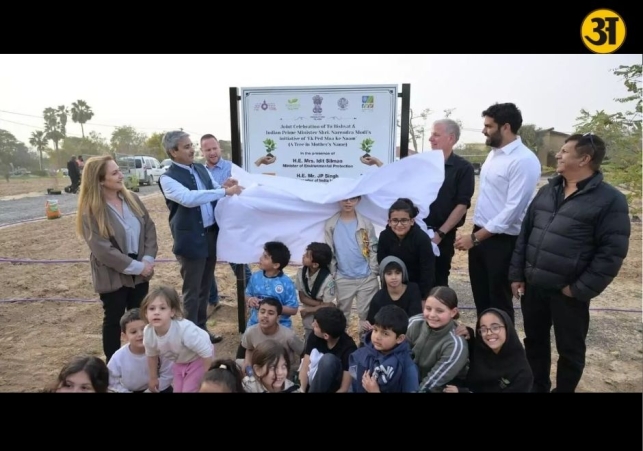
At least 300 trees were planted in Moshav Nevatim in southern Israel to celebrate Prime Minister Narendra Modi’s ‘Ek Ped Maa ke Naam’ initiative. The plantation drive was also held to mark Tu Bishvat, a Jewish festival observed as a day of ecological awareness and renewal. The event brought together hundreds of participants and highlighted the growing cooperation between India and Israel on environmental protection and sustainability.
The programme was organised by the Embassy of India in Israel in partnership with Keren Kayemet LeIsrael and the local community of Moshav Nevatim. According to a statement released after the event, the tree plantation symbolised a shared commitment to environmental sustainability, community participation, and strong people-to-people relations between the two countries.
Senior officials from both nations took part in the event. These included Rami Rozen, Director General of Israel’s Ministry of Environmental Protection; JP Singh, Ambassador of India to Israel; and Nir Zamir, Head of the Bnei Shimon Regional Council. Each of them spoke about the importance of protecting nature and passing on a healthy planet to future generations.
Shared values and green vision
Addressing the gathering, Indian Ambassador JP Singh said that both Tu Bishvat and the ‘Ek Ped Maa ke Naam’ initiative place trees at the centre of community life and sustainable living. He noted that these practices reflect deep cultural connections and shared values between India and Israel.
Singh said the event showed how both countries value nature, community involvement, and environmental responsibility. He added that trees are not just symbols of life, but also reminders of the duty people have towards the planet. According to him, the trees planted during the event would stand as lasting symbols of the friendship between India and Israel.
The ambassador further stressed that the relationship between the two nations goes beyond diplomacy and trade. He said it is rooted in shared values, mutual respect, and a common belief in protecting nature. Singh expressed confidence that the bond between the two countries would continue to grow stronger with such meaningful initiatives.
Rami Rozen also spoke about the importance of environmental cooperation. He said that India and Israel are already working closely in many areas, especially in climate action, environmental protection, and innovation. According to Rozen, protecting nature is an essential part of protecting life itself.
ALSO READ: Shehbaz Sharif says Pakistan feels ashamed seeking loans abroad
He explained that while both countries aim for technological progress and innovation, they also recognise the need to preserve natural resources. Rozen said that events like this plantation drive show how shared responsibility and cooperation can help build a greener and more sustainable future.
Nir Zamir highlighted the role of local communities in protecting the environment. He said tree plantation drives encourage people to take direct responsibility for nature. He added that just as trees need strong roots to grow, strong relationships between nations are built on shared values and long-term commitment.
Nevatim’s Indian connection
Moshav Nevatim holds a special connection to India. It was founded by Indian Jews from Cochin and still reflects this heritage today. The settlement has a synagogue designed in the style of a traditional Cochini synagogue, keeping alive the cultural and spiritual traditions brought from India.
Nevatim is also home to the Indian Jewish Heritage Center, which works to preserve and promote the history, values, and traditions of Jews from India. The centre serves as a reminder of the deep historical links between the Indian subcontinent and the Jewish community.
The Moshav attracted international attention in November last year when a statue of Indian Maharaja Jam Sahib was unveiled there. The statue honours his humanitarian efforts during the Second World War, when he helped save Jewish and Polish children by giving them refuge. This act of compassion is still remembered as a powerful example of India’s long-standing support for humanitarian values.
The plantation event added another chapter to Nevatim’s unique story. By linking PM Modi’s ‘Ek Ped Maa ke Naam’ initiative with Tu Bishvat, the programme created a bridge between Indian and Jewish traditions that both celebrate nature and life.
Participants said the event was not just about planting trees, but about strengthening bonds between people. Families, community members, and officials worked together, reinforcing the idea that environmental protection is a shared responsibility.
The ‘Ek Ped Maa ke Naam’ initiative encourages people to plant a tree in honour of their mother, linking environmental action with emotional and cultural values. By taking this initiative beyond India’s borders, the event in Israel showed how environmental messages can unite people across cultures and countries.
As the trees planted in Nevatim grow over the coming years, they are expected to serve as living symbols of friendship, cooperation, and shared responsibility. The organisers said such initiatives help spread awareness about climate action while also deepening ties between nations.
The event clearly reflected how India and Israel are strengthening their partnership not only in strategic and economic fields, but also in areas that affect everyday life, such as environmental protection. With growing global concerns about climate change, such joint efforts underline the importance of working together to protect the planet for future generations.
Related News
.jpg)